Columbia researcher on public policy about nonresident fathers
PROVO, Utah — Public policy in the United States in recent decades has focused almost solely on the importance of nonresident fathers as financial providers.
But from his extensive research, Ronald B. Mincy, a Columbia University professor of social policy and social work practice, believes more can be done to improve the quality of interactions between these fathers and their children, which could have a positive impact on children’s intellectual, social and emotional development beyond just their fathers’ money.
“What we know is that fathers who … learn how to provide quality interactions with their children, their children are better off in terms of their behavior, in terms of their academic achievement and so on,” Mincy said during a presentation in the Hinckley Center on the Brigham Young University campus Feb. 9.
Mincy traveled to the Provo, Utah, campus as the featured presenter at this year’s 19th Annual Lecture of the Marjorie Pay Hinckley endowed chair in social work and the social sciences.
Mincy, who has a bachelor’s degree from Harvard University and a doctorate from Massachusetts Institute of Technology, is one of the principal investigators of “The Future of Families and Child Wellbeing Study,” formerly known as “The Fragile Families and Child Wellbeing Study,” which has followed 5,000 children born between 1998 and 2000, as well as their mothers and fathers, for the past 22 years.
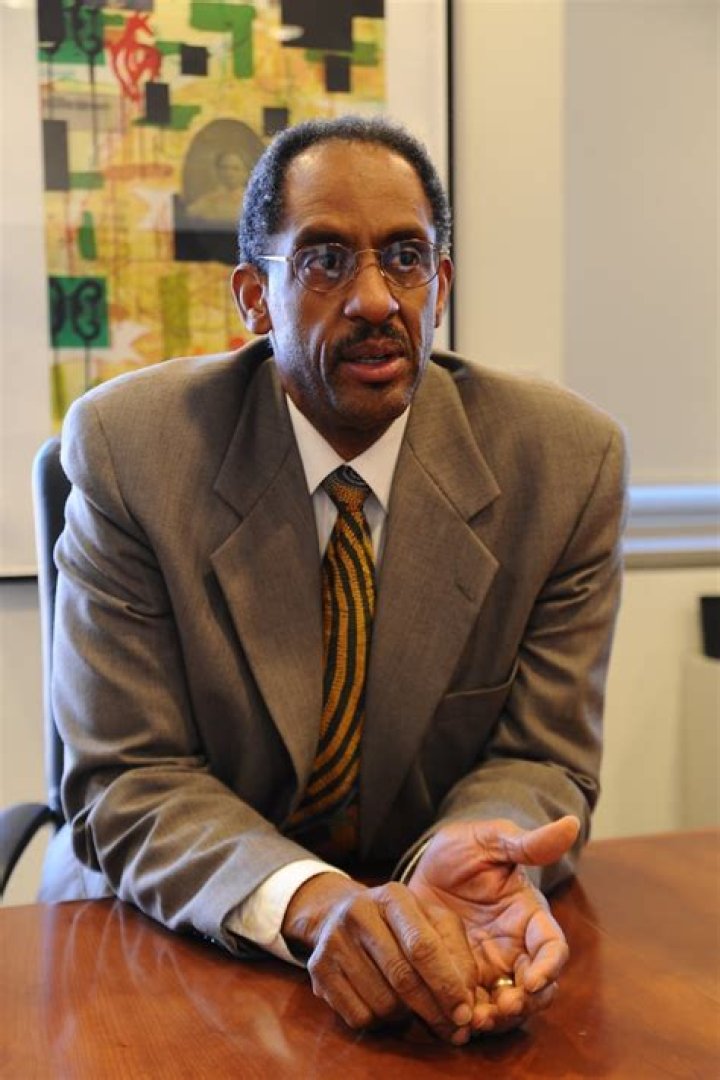
Ronald B. Mincy — the Maurice V. Russell Professor of Social Policy and Social Work Practice and director of the Center for Research on Fathers, Children, and Family Well-Being at Columbia University — was the featured speaker at the 19th Annual Lecture of the Marjorie Pay Hinckley Endowed Chair on BYU campus in Provo, Utah, on Feb. 9, 2023.
Provided by Ronald B. Mincy
“The purpose of the study is to figure out how the circumstances of the parents and the circumstances of the policies under which those parents function, or the circumstances of the community in which they live, how do those things influence children’s development,” Mincy said.
Mincy’s research has zeroed in on nonresident fathers, which is a growing population.
“We are spending billions of dollars to collect child support that most nonresident fathers cannot pay and ignoring the other things that they can do to benefit their children,” Mincy said in a BYU press release. “The question on my mind is, if we took some of the money we spend on collecting child support and instead developed engaged nonresident fathers in parenting programs, would the benefits to children be better?”
